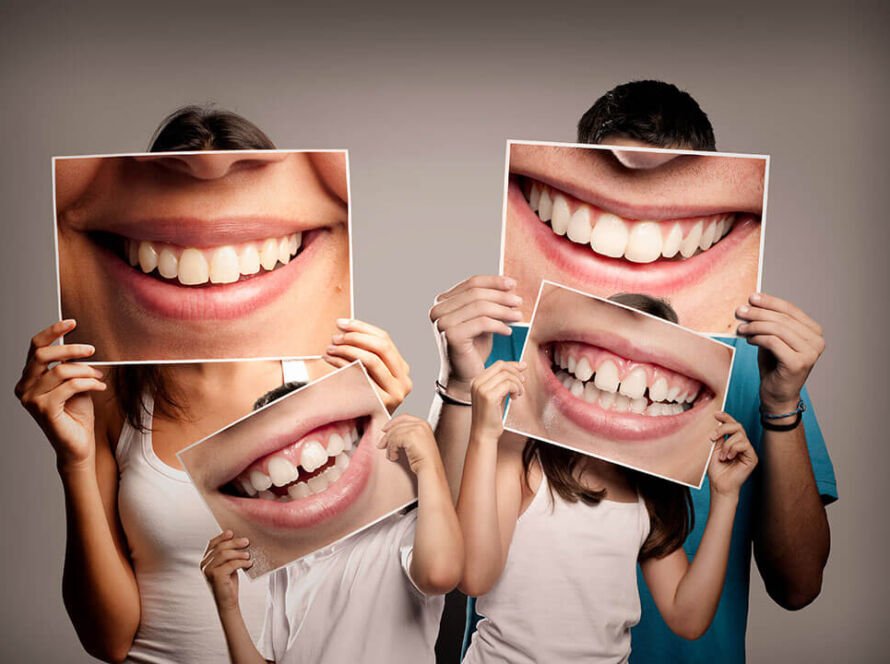
The smile is the most powerful means of expression on the human face. A person’s smile plays a major role in both social interaction and self-confidence. However, an aesthetic smile is not just composed of white and straight teeth. A truly beautiful smile must be in holistic harmony with facial features, lip form, gum health, temporomandibular joint balance, and muscle activity.
This is where Digital Smile Design (DSD) comes into play.
What is Digital Smile Design?
Digital Smile Design is a personalized planning method that digitally analyzes an individual’s facial features, lip movements, tooth form, and jaw structure.
In this system, the patient’s face is photographed from different angles, videos are taken, and the aesthetic ratios of the teeth, lips, and face are evaluated in three dimensions using specialized software.
The goal is not only to create an aesthetic smile but also to achieve a result that is natural, balanced, and functional with the person’s facial expression.
The Intersection of Science and Art
Digital smile design combines the technical knowledge of dentistry with an artistic understanding of aesthetics.
Every patient’s face type, eye line, smile line, and lip curvature are different. Therefore, the same “Hollywood smile” is not suitable for everyone.
Through digital analysis, the clinician’s eye and the artist’s aesthetic sense come together to create a unique smile identity tailored to the individual.
Advantages Provided by Technology
Digital planning software (such as SmileCloud, ExoCAD, 3Shape DSD, etc.) offers great conveniences to the dentist and the patient:
3D Preview (Mock-up): The result is digitally shown to the patient before starting the treatment.
Symmetry and Proportion Control: Tooth lengths, lip curvature, and nose-to-chin ratio are measured with millimeter precision.
Time Saving: Treatment planning is performed quickly and accurately.
Personal Involvement: The patient actively participates in their own smile design.
Thus, both the clinician and the patient share the same vision, and there are no surprise outcomes during the treatment process.
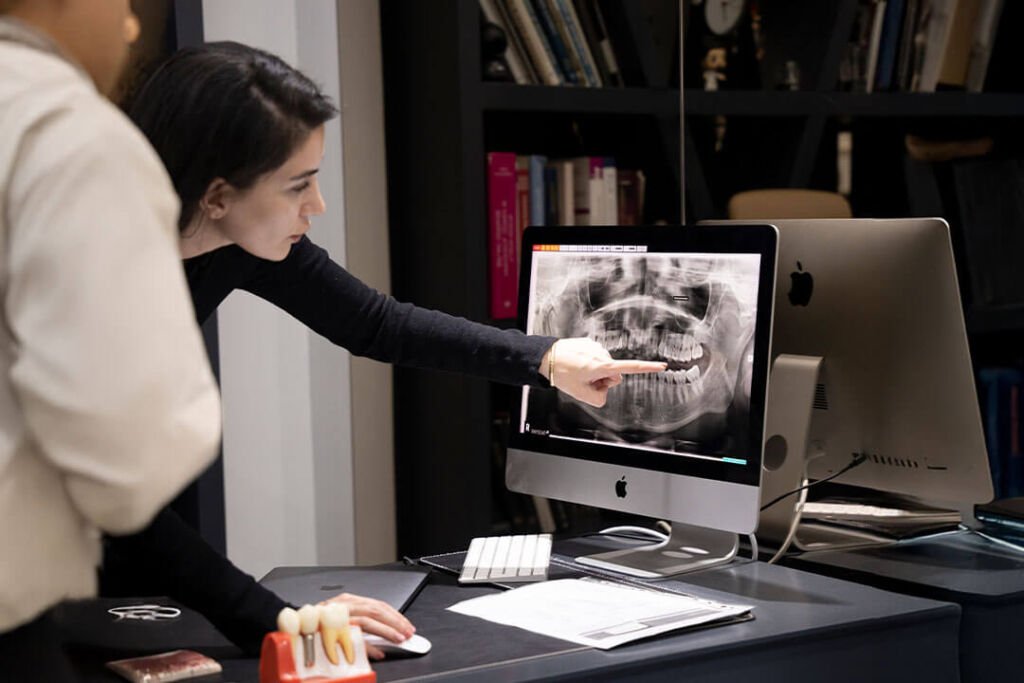
The role of function is another element as important as aesthetics.
Temporomandibular joint (TMJ) health, the symmetrical function of the muscles, and the equal distribution of chewing forces are essential for a long-lasting smile.
For this reason, the digital smile design process includes not only aesthetic analysis but also muscle activity analysis and occlusal (biting) measurements.
The goal is to create not just a beautiful smile, but a comfortable and healthy jaw system.
New Trends in Digital Aesthetics
In the past, “perfect white” teeth were preferred in dental aesthetics.
However, the current trend has shifted towards natural and personalized smiles.
With digital planning, customized color transitions can be designed according to the teeth’s shade relative to the facial complexion, skin tone, and lip form.
The current goal is an aesthetic that is “naturally noticed, not attention-grabbing.”
The Digital Experience for Patients
A person who wants a smile design no longer has to simply imagine what is being described.
The digital mock-up created before the treatment shows the patient exactly what kind of change they will experience on their own face.
This makes the decision-making process more informed and secure.
Furthermore, thanks to digital records, future corrections or renewals can also be planned quickly.